
ॐ ❖ ॐ
🏛️
✦
Kataragama
Sri Lanka's Sacred Heart
Sacred Journey0%
✦ Sacred Destination of Sri Lanka ✦
Sri Lanka's Sacred Heart
Kataragama Festival 2026 — Dates, Schedule & Visitor Guide
Sri Lanka's most sacred multi-religious festival — firewalking, grand processions, and ancient rituals over 14 days in Kataragama.
Festival Dates 2026
Late July – Early August
Follows Esala full moon (Poya day)
Duration
14 Days
Kap Situveema to Diya Kapeema
Daily Puja Times
4:30 AM · 10:30 AM · 6:30 PM
Kataragama Maha Devalaya
The Kataragama Esala Perahera is the main festival of the Kataragama temple complex, dedicated to Lord Skanda (Murugan / Kataragama Deviyo). This grand celebration takes place annually in July or August during the Esala full moon (Poya day), and is one of Sri Lanka's most important cultural and religious events.
Unlike the Kandy Esala Perahera which is primarily Buddhist, the Kataragama festival is unique in drawing pilgrims from all religions — Hindu, Buddhist, Muslim, and Vedda — making it a truly multi-faith celebration lasting 14 days.
The festival honours Lord Skanda and seeks his blessings for prosperity and protection. Participating in the rituals is believed to bring spiritual merit and divine favour — drawing over 500,000 pilgrims annually.
Celebrated for over 2,000 years, the Kataragama Esala Perahera combines Buddhist, Hindu, and indigenous Vedda traditions into a unique tapestry of sacred heritage found nowhere else in the world.
Best Viewing Spots
Near the Maha Devalaya entrance and along the main procession route. Arrive 2–3 hours early to secure a front-row position on peak Randoli Perahera nights.
Dress Code
Sarong required for men (available at gate). Women should cover shoulders and wear a cloth below the waist. Remove footwear before entering temple buildings.
Photography
Generally permitted in public areas. Be respectful and silent during puja and rituals. Never photograph devotees performing body piercing without permission.
Getting There
Bus from Colombo (~6 hrs, LKR 400), private taxi (~LKR 15,000), or train to Matara + connecting bus. Book accommodation months in advance.
Rooms fill up completely during the Perahera season. Book at least 3–4 months in advance for 2026.
Find Accommodation4-Day Festival Experience
Guided experience with VIP viewing of the Randoli Perahera, accommodation, temple visits, and cultural activities.
From $299 per person
According to ancient legend, Lord Skanda (also called Murugan, Kartikeya, or Kataragama Devivo) originally lived on Mount Kailash with his first divine consort Thevani (Devasena). After a disagreement, he embarked on a mystical journey across the cosmos and arrived in Sri Lanka, settling on Wedahitikanda mountain near Kataragama.
There, he fell deeply in love with Valli, a radiant 16-year-old princess raised by the indigenous Vedda chief. Their sacred union symbolises the divine meeting the earthly — the celestial god marrying a jungle princess. Valli later became deified herself, and their love story is celebrated annually during the Perahera, where the procession from the Maha Devale to Valli's shrine represents the deity visiting his beloved.
The Buddhist tradition holds that Lord Buddha, during his third visit to Sri Lanka, met King Mahasena of Ruhuna and instructed the deity to reside at Kataragama to protect the people and the Buddhist Sasana (teachings), ultimately stopping animal sacrifices.
The indigenous Vedda people — Sri Lanka's original inhabitants — venerate this deity as Kande Yaka (the hunter god), incorporating their shamanic practices and ancient silent rituals into the temple's ceremonies. This multi-layered spiritual inheritance makes Kataragama uniquely syncretic.
King Dutugemunu is said to have built the original shrine after receiving blessings from the deity before his legendary victory over King Elara. The site became known as a powerfully sacred place.
References to Kataragama appear in ancient chronicles and texts. The temple was a major pilgrimage destination for both Hindus and Buddhists, drawing devotees from across the island and from India.
Even under colonial rule, pilgrims continued their sacred journeys. The temple's syncretic nature meant it remained a neutral sacred space respected by all communities.
The Esala Perahera evolved into its present spectacular form, becoming Sri Lanka's most iconic multi-religious festival with over 500,000 pilgrims attending annually.
Kataragama stands as a living testament to religious coexistence. Buddhists, Hindus, Muslims, and Vedda people worship at the same sacred site — a rare testament to Sri Lanka's spiritual pluralism.
The Perahera displays some of the world's most intense acts of devotion: firewalking across burning coals, body piercing with vel (spears), and deep meditative states — all performed with genuine faith and conviction.
The festival symbolises the eternal balance of divine love (Skanda + Valli), spiritual protection (the deity guards the land), and the triumph of faith over physical limitations.
Discover more cultural celebrations throughout the year.
 Jan 14–15, 2026
Tamil harvest festival with special pujas and sweet pongal preparation at the Kataragama Temple.
Learn MoreApr 13–14, 2026Traditional New Year celebrations with special rituals and ceremonies at the Kataragama Temple.
Learn MoreMonthly (Full Moon)Monthly full moon celebrations with increased pilgrimages and special ceremonies at the temple.
Learn MorePlan your visit to coincide with this extraordinary festival and witness Sri Lanka's cultural heritage at its most vibrant. Accommodation books out months in advance.
Chapter I
In the beginning, there was the celestial realm of Mount Kailash, where Lord Skanda—divine son of Shiva and Parvati, known in various traditions as Murugan, Kartikeya, and in Sri Lanka as Kataragama Devivo—lived in divine bliss with his first consort, the goddess Thevani (Devasena).
But destiny had other plans. Following a cosmic disagreement, the Lord embarked on a mystical journey across the celestial and earthly realms, eventually arriving on the sacred Wedahitikanda mountain near Kataragama in the island of Sri Lanka.
Here, in the jungles teeming with ancient Vedda people, Lord Skanda encountered a radiant princess named Valli. She was a mere sixteen years old, daughter of the Vedda chief, raised among the forest flowers and wild jasmine. Her beauty transcended the earthly realm—divine light seemed to shimmer around her dark eyes.
The Lord of the Heavens fell madly, desperately in love. A god fell for a mortal princess. The divine embraced the earthly. Their union became a living, breathing metaphor for the eternal cosmic dance between the sacred and the mundane, between immortal divinity and human existence.
Valli accepted his eternal love. She was deified, becoming a goddess herself. Together, they established Kataragama as a sacred nexus where heaven and earth touch, where millions of pilgrims come to experience this transcendent divine love story.
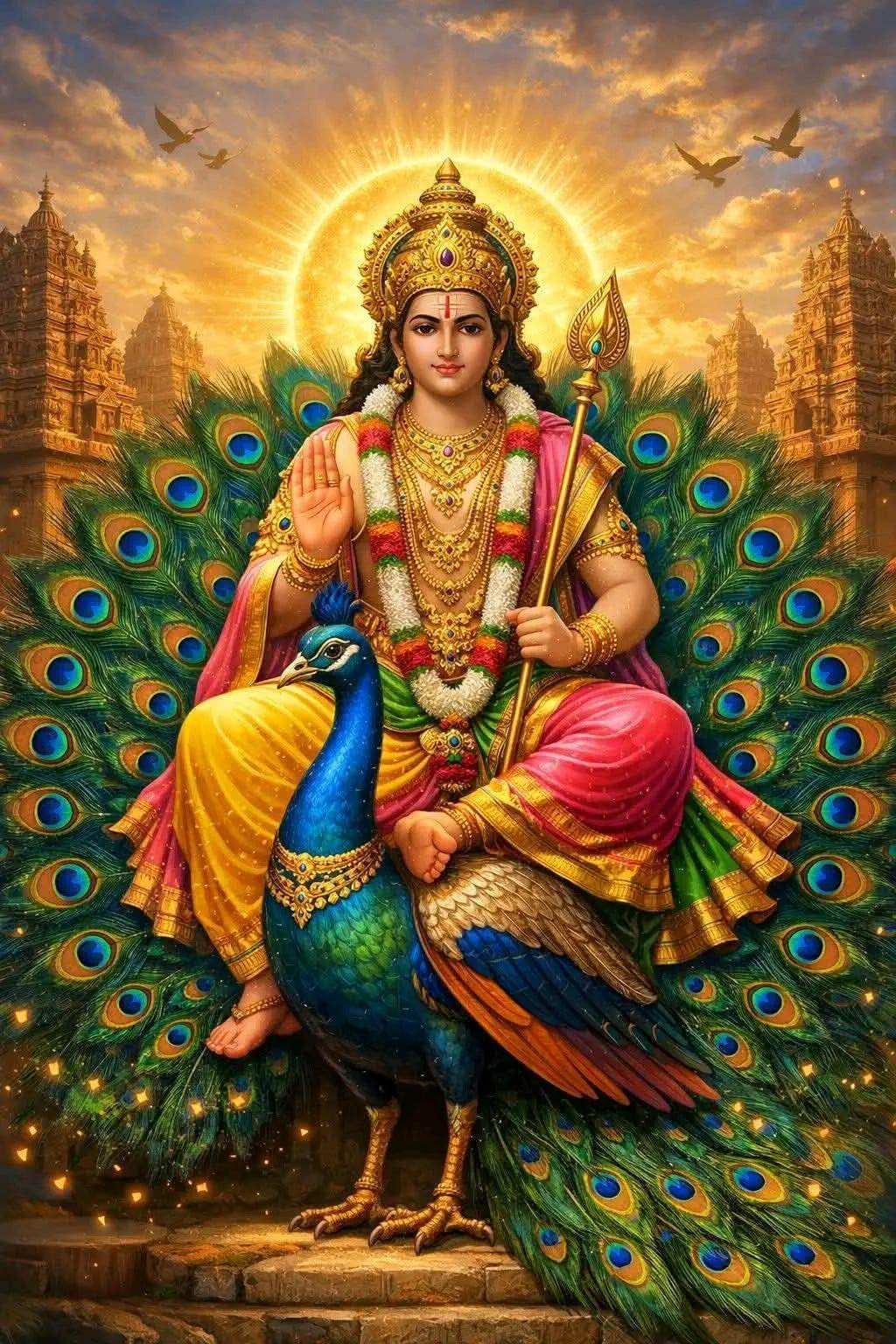
The Divine Lord Skanda (Murugan) in his celestial form with the sacred peacock
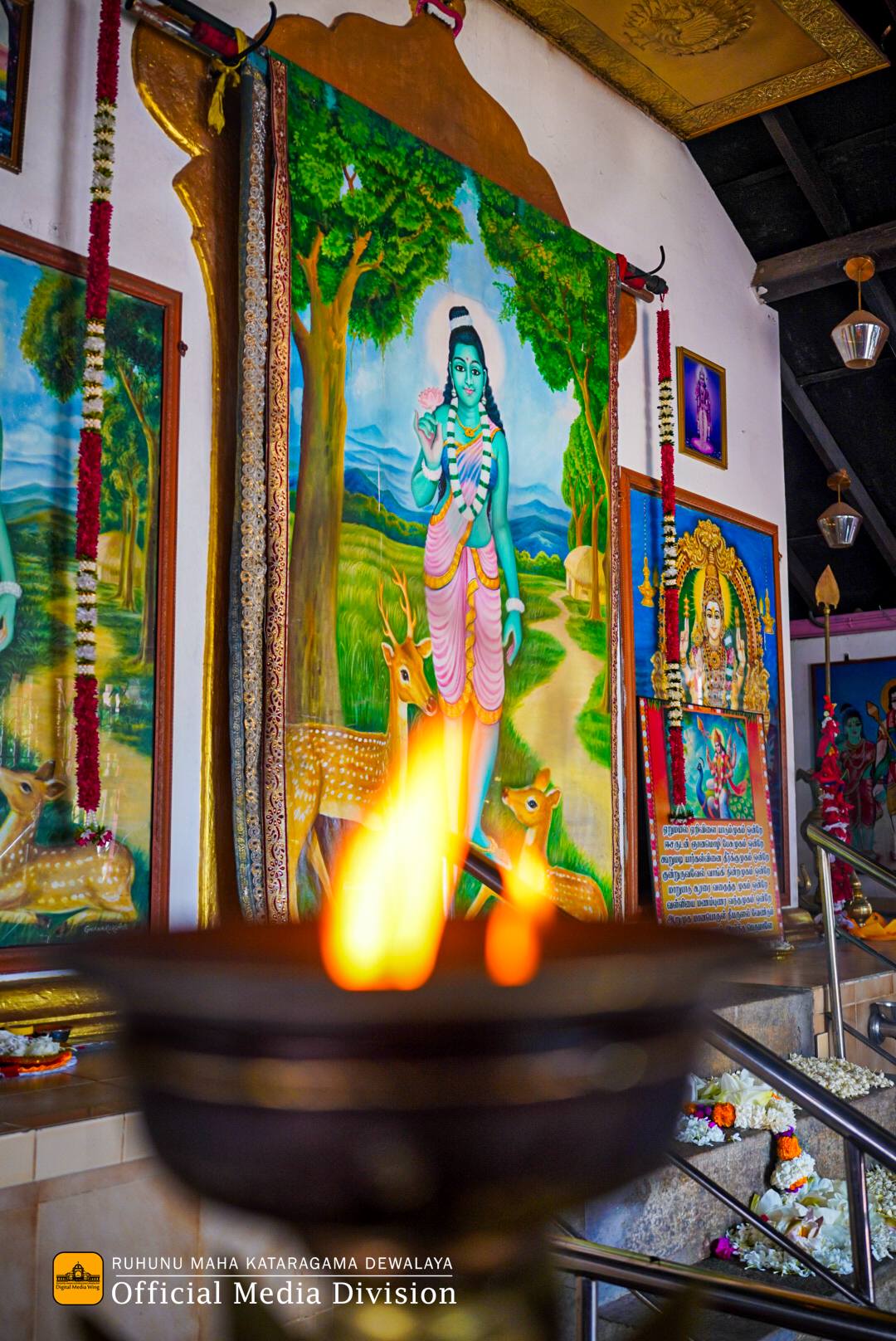
The sacred inner sanctum where the divine presence is felt most intensely
Chapter II
The Kataragama shrine has stood witness to two thousand years of human devotion, faith, and transformation. It is not merely a temple—it is a living testament to the spiritual resilience of an entire civilization.
In the 2nd century BC, the great King Dutugemunu of Sri Lanka—legendary warrior and protector of Buddhism—is said to have received divine blessings from Lord Skanda before his historic victory against King Elara. Grateful for this celestial intervention, the king established the original shrine at Kataragama, transforming it into a place of worship and pilgrimage.
Through medieval times, when kingdoms rose and fell across the Indian Ocean, Kataragama remained a constant beacon of spirituality. Hindu pilgrims journeyed from Tamil Nadu and beyond. Buddhist devotees came to pay respects to the deity who protected the Buddha's teachings. Indigenous Vedda people maintained their shamanic rituals at the sacred site, creating a unique fusion of diverse spiritual traditions.
When European colonial powers arrived and attempted to reshape Sri Lanka in their image, Kataragama endured. Pilgrims still came. Sacred rituals continued in the shadows of colonial rule. The temple's syncretic nature—its openness to multiple faiths—became its greatest strength.
In the modern era, the Esala Perahera evolved into the magnificent spectacle we witness today. What began as simple temple worship transformed into a 14-day symphony of faith, featuring decorated elephants, firewalking devotees, intricate rituals, and a gathering of over 500,000 pilgrims each year. Kataragama became not just a sacred site, but a global symbol of multi-religious harmony.
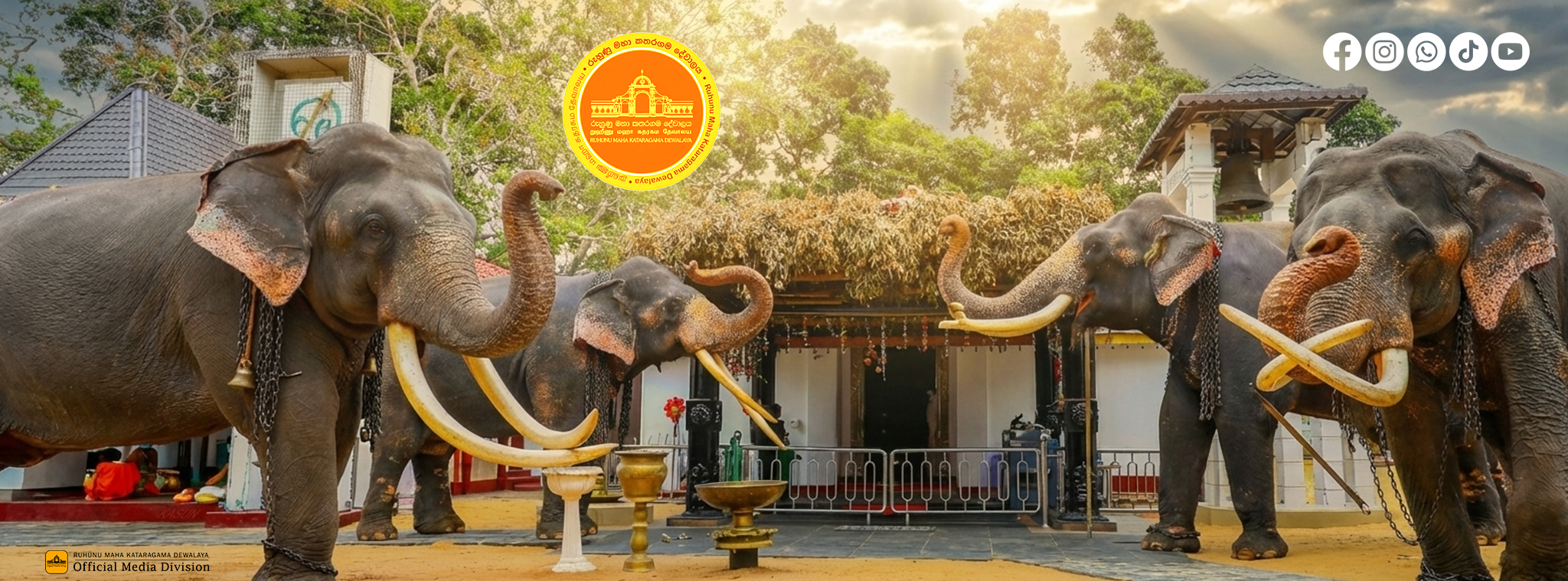
Majestic ceremonial elephants standing at the Maha Devalaya—guardians of sacred tradition
Chapter III
The Esala Perahera is not a mere celebration—it is a carefully orchestrated spiritual performance spanning 14 sacred days, each with profound meaning and ancient significance.
Days 1–5: Kap Situveema (The Tree Planting Ceremony) The festival begins with the solemn planting of a young jackfruit sapling in the temple grounds. This ancient ritual symbolizes the sprouting of divine blessings. As the tree is planted, priests chant sacred mantras, and the gathered pilgrims witness the beginning of a new spiritual cycle. The tree represents growth, prosperity, and the flourishing of faith in all hearts.
Days 6–10: Kumbal Perahera (The Inner Processions) Each evening, after sunset, the temple gates open and processions begin within the sacred precinct. Drummers beat rhythmic patterns passed down through generations. Dancers move in synchronized steps. Torch-bearers illuminate the darkness with dancing flames. Each night, the processions grow more elaborate, building momentum, heightening anticipation.
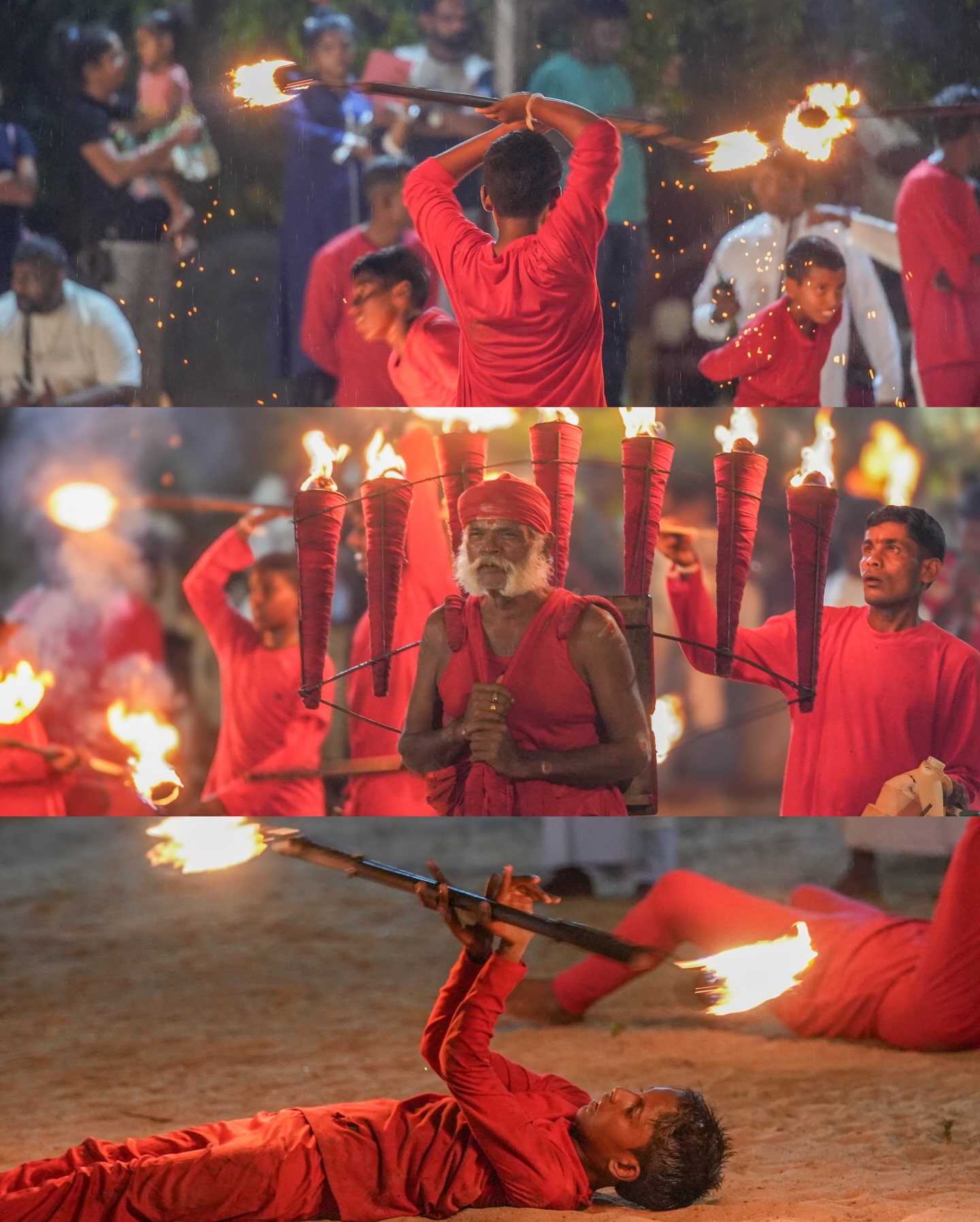
Days 11–14: Randoli Perahera (The Grand Processions) This is the climax. Decorated elephants—adorned with golden cloth, colorful banners, and precious ornaments—process through Kataragama's streets. Kavadi dancers, pierced with vel (sacred spears), perform ecstatic dances. Fire performers juggle flaming torches. Palanquins representing Lord Skanda and Valli are carried aloft. Hundreds of drummers create a thunderous symphony. It is chaos and order, sacred and visceral, human and divine all at once.
Day 15: Diya Kapeema (The Water-Cutting Ceremony) At dawn, as the first light touches the Menik Ganga river, priests wade into the sacred waters wearing white robes. With a sacred sword, they symbolically cut the water—a ritual sealing the blessings of the festival. Pilgrims wade in to receive the sacred water's blessing. The Perahera closes, but the spiritual transformation lingers.
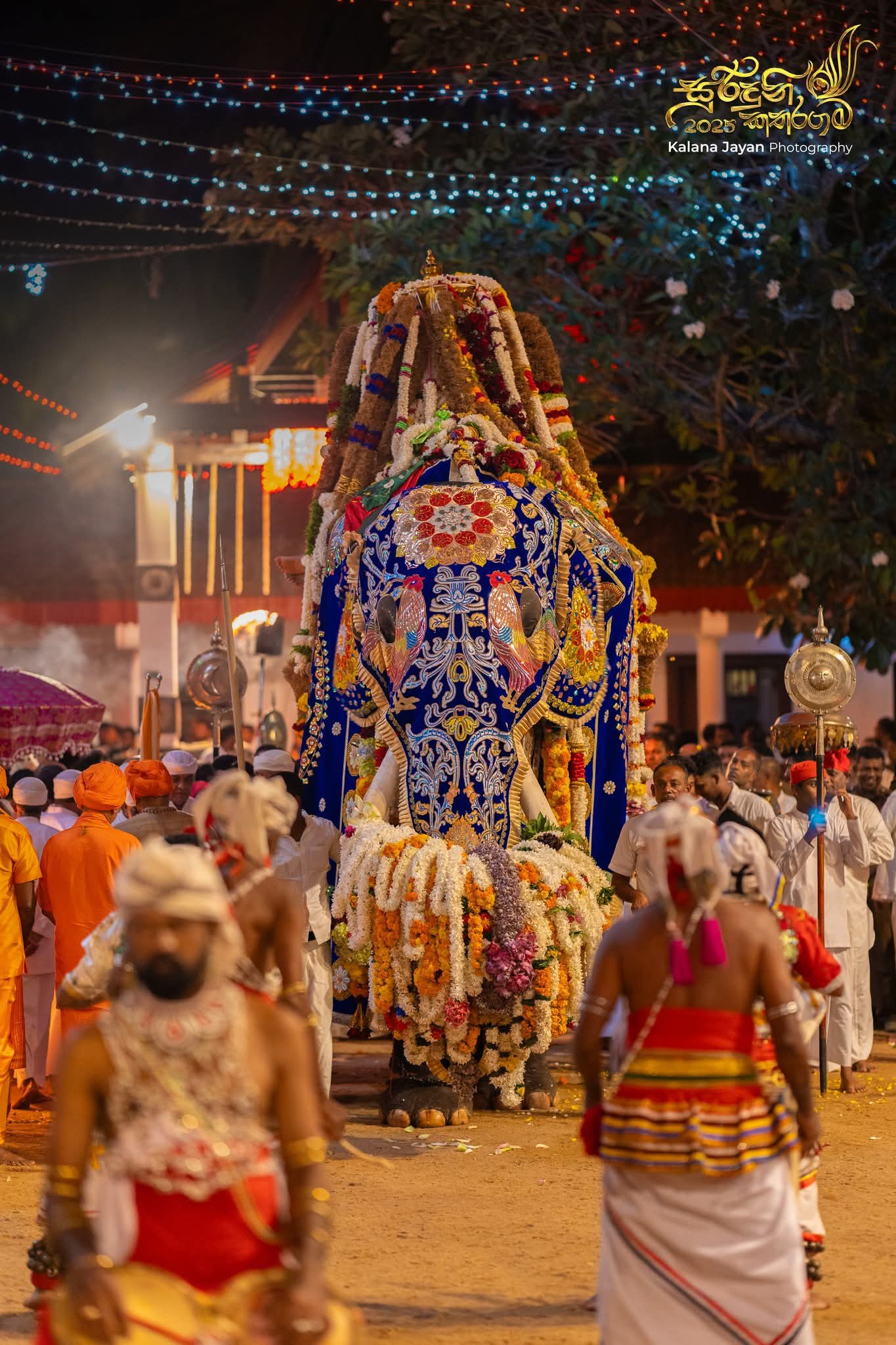
The temple elephant—symbol of strength and sacredness—leads the grand procession
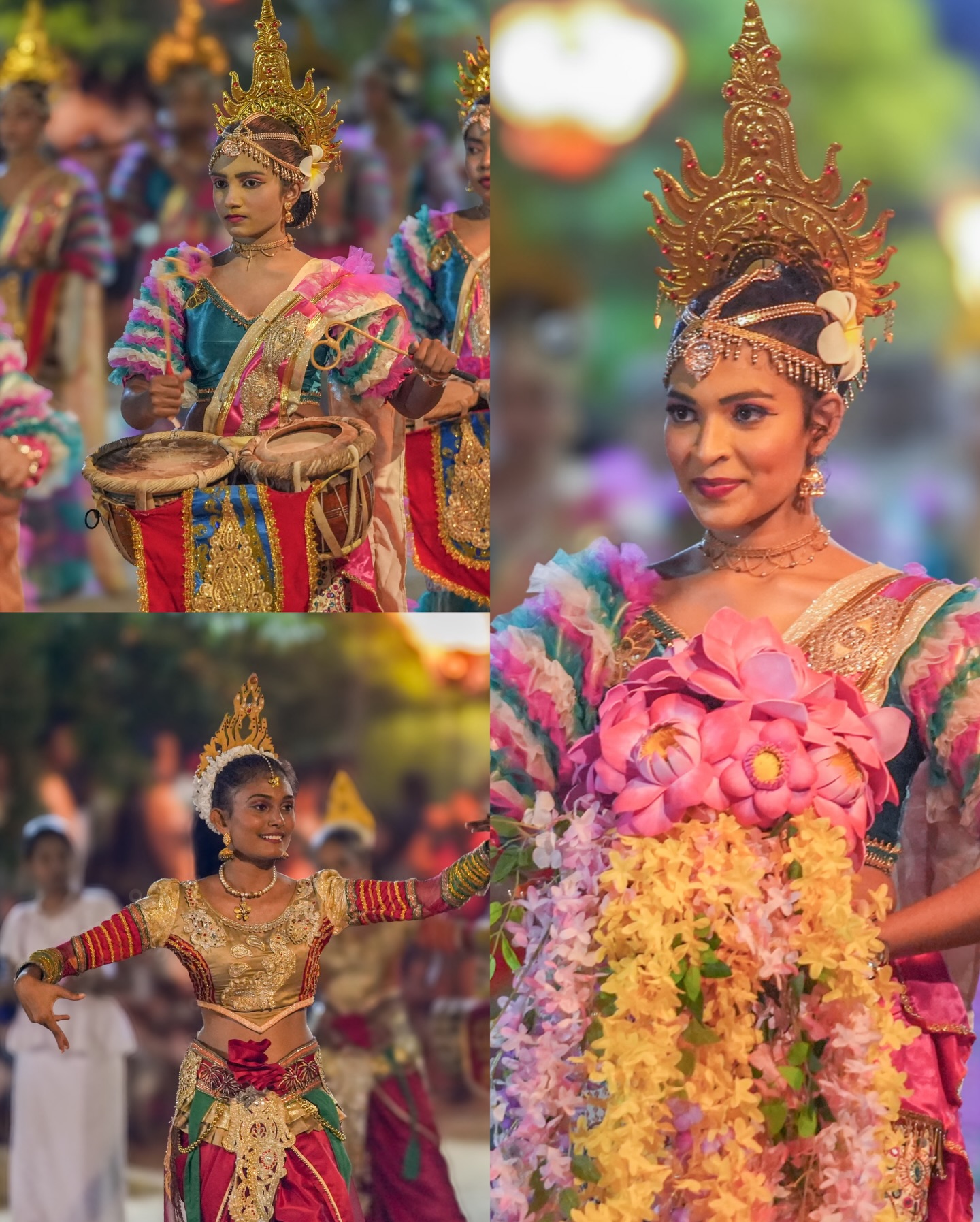
Kavadi dancers adorned in peacock feathers and gold—embodying divine ecstasy
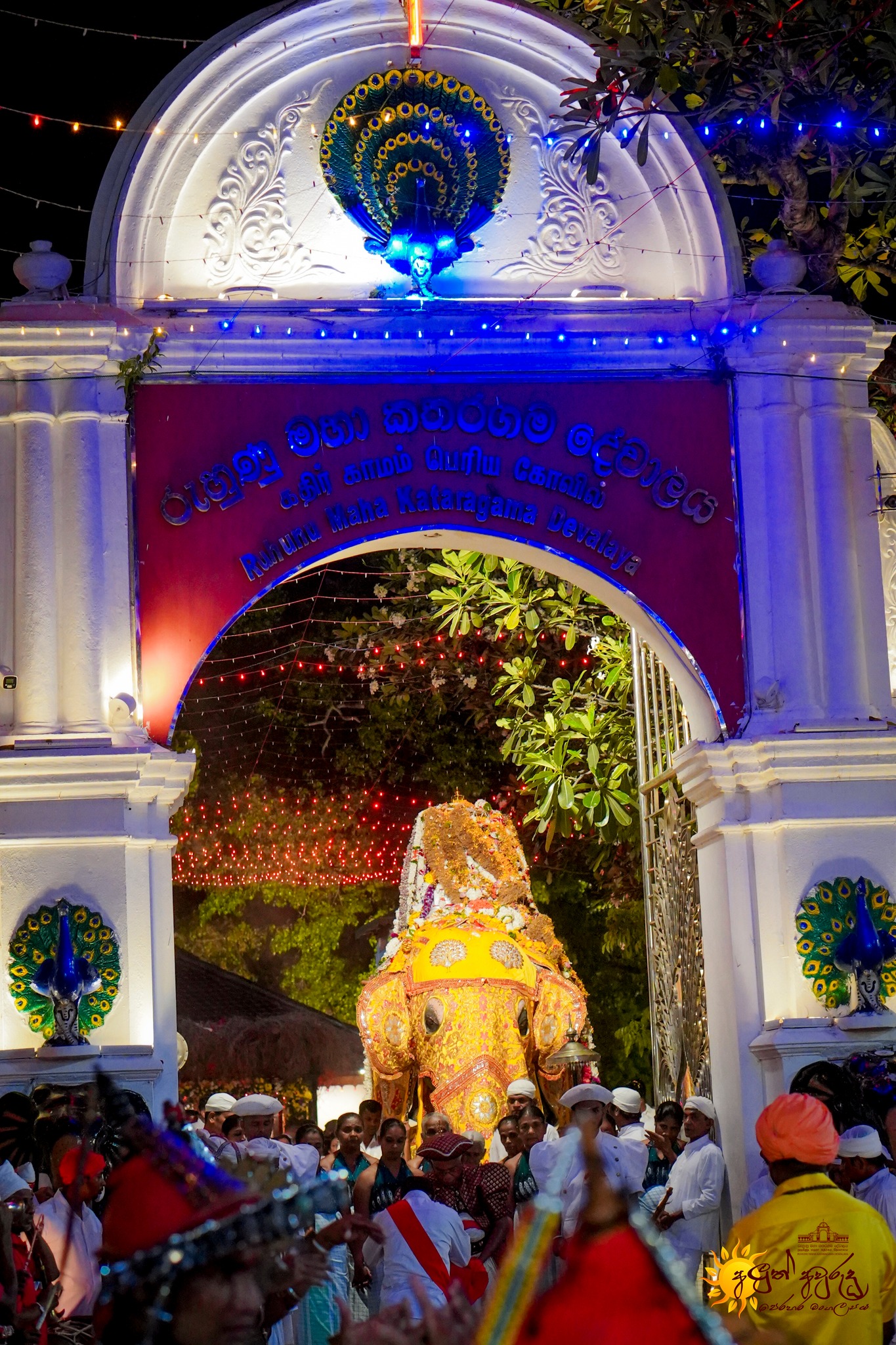
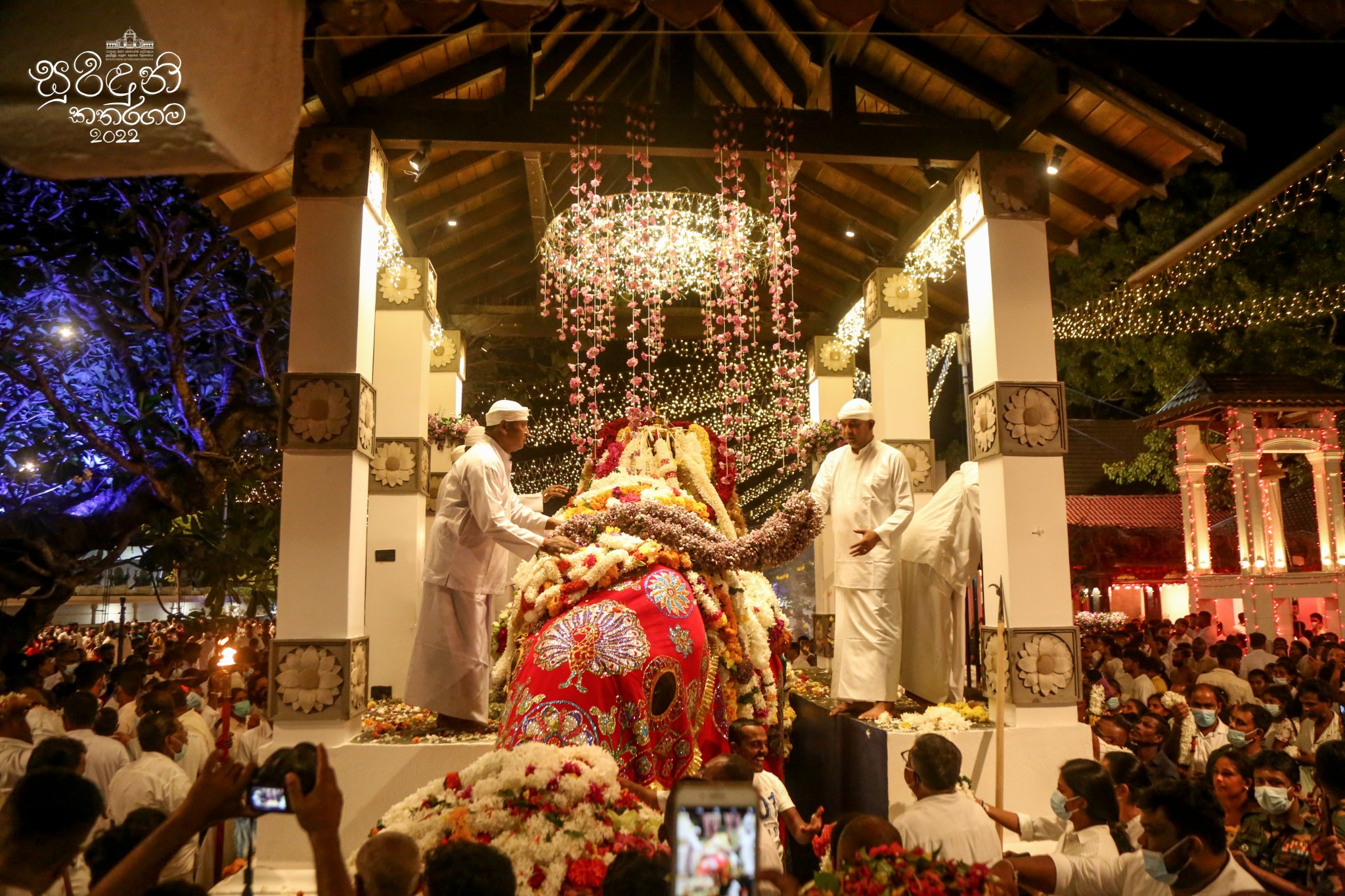
The sacred elephant within the temple gateway—a moment of divine communion
The firewalking ritual—devotees walking on burning coals as an act of ultimate faith
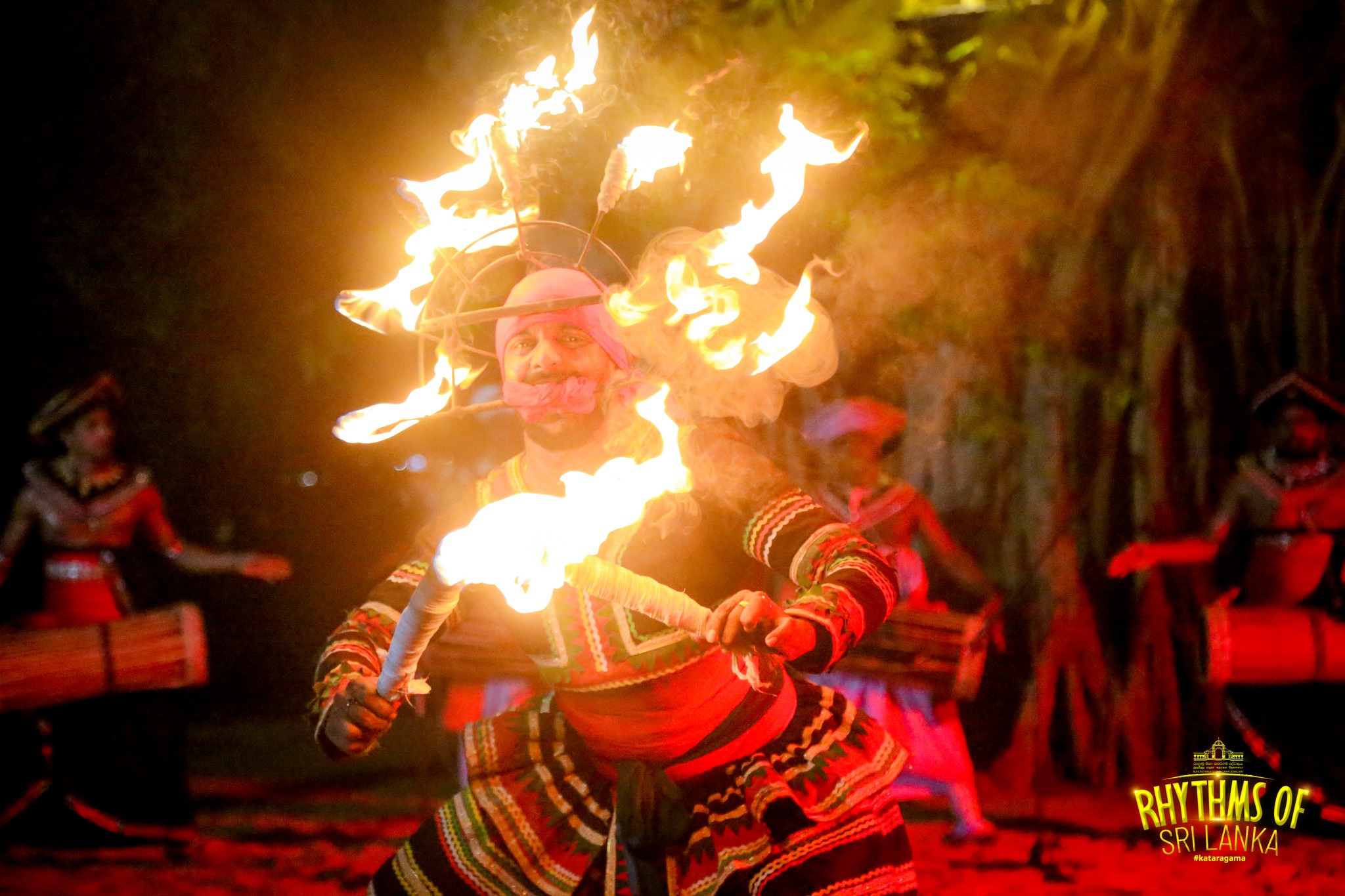
A fire performer—master of transformation, dancing with the cosmic flames
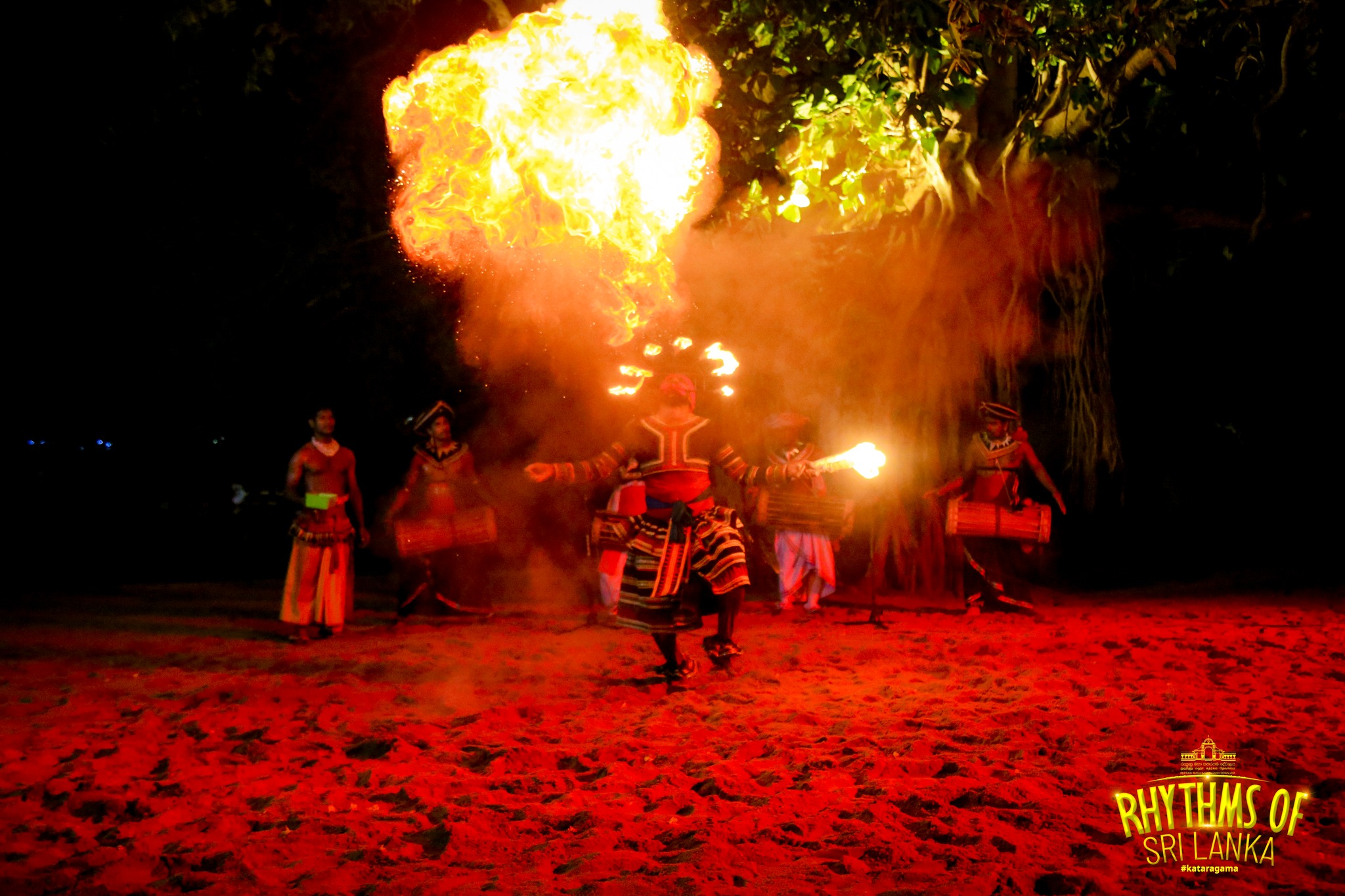
Torchbearers creating rivers of fire—light dispelling darkness and ignorance
Temple priests performing sacred pujas—channels of divine grace and blessings
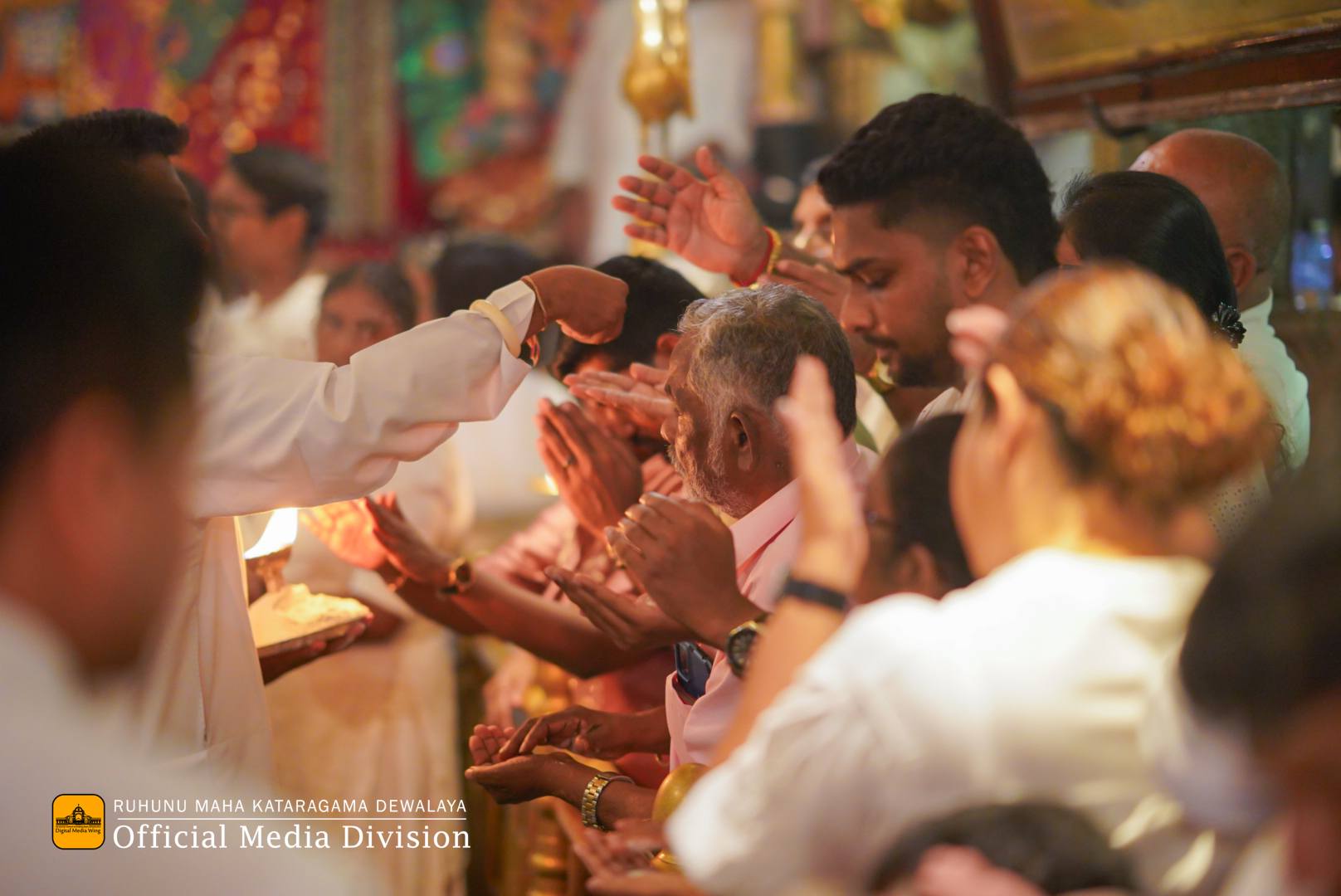
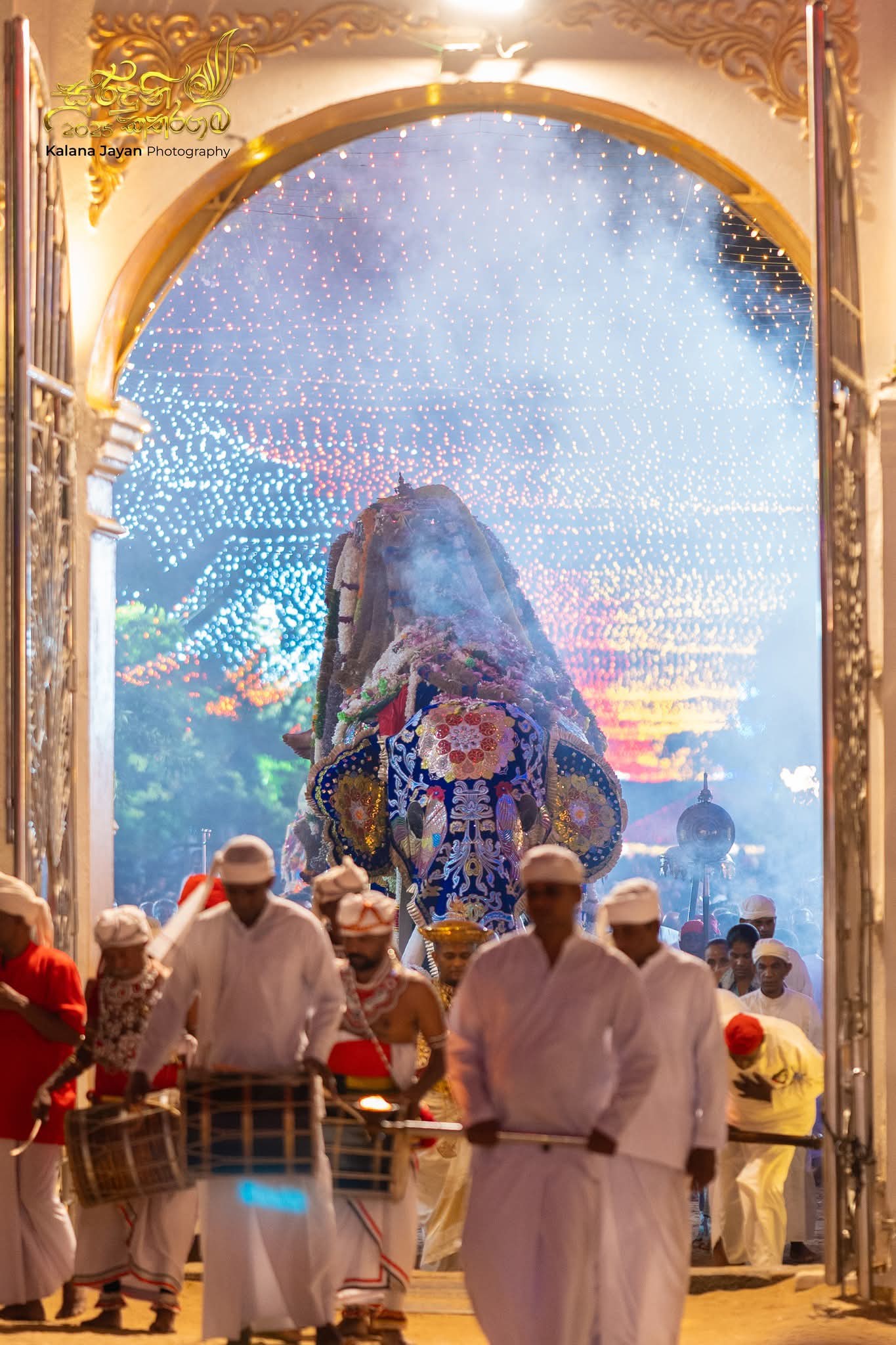
The celestial procession—earth and heaven meeting in a shower of golden light
Fire spitting and torch juggling—ancient techniques serving sacred purposes
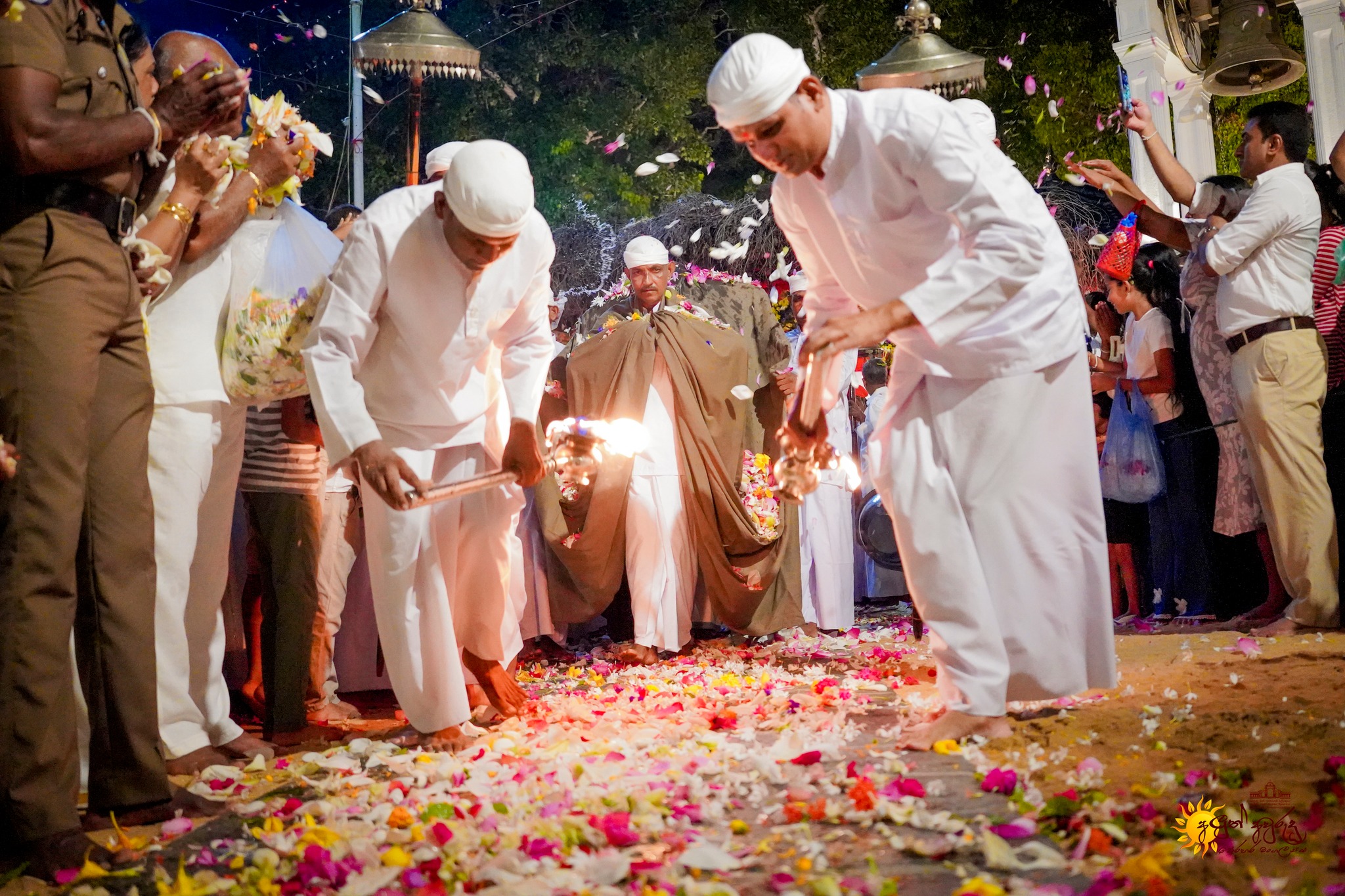
Devotees presenting flower offerings—a silent prayer of the heart
Chapter IV
What makes Kataragama and the Esala Perahera globally significant is not merely its spectacle, but the profound spiritual principles it embodies and exemplifies to a fragmented world.
Religious Pluralism & Coexistence: In an era of religious conflict and divisiveness, Kataragama stands as a living beacon of multi-faith harmony. Buddhists worship alongside Hindus. Muslims join Christians in honoring this sacred space. Indigenous Vedda people maintain their ancient shamanic practices within the same sanctuary. The temple's interior sanctum, the Devale, welcomes all believers regardless of faith tradition. Kataragama teaches the world that the divine can be approached through multiple paths, that sacredness transcends doctrinal boundaries.
Devotion Beyond Belief: The firewalking ceremony, the body-piercing with vel, the fasting and prayer—these are not mere spectacles. They represent human beings willing to transcend physical limitations through faith and devotion. Devotees who walk on coals report profound spiritual experiences. The pain is transcended. Fear dissolves. In those moments, they touch something eternal, something beyond the material world. Modern pilgrims, skeptics, and believers all witness this transformation.
The Love Story as Sacred Metaphor: The legend of Skanda and Valli is not a love story to be sentimentalized. It is a profound metaphor for the soul's journey toward the divine. Valli represents the individual soul—earthly, vulnerable, mortal. Skanda represents divine grace—eternal, powerful, transcendent. Their union symbolizes the wedding of the human with the divine, the moment when the limited self touches the infinite. Every ritual, every procession, every act of devotion re-enacts this sacred union.
Transformation Through Sacred Time: The Esala Perahera occurs during the full moon of Esala (July-August), a time considered deeply auspicious in Hindu, Buddhist, and indigenous traditions. During these 14 days, ordinary time becomes sacred time. Everyday consciousness gives way to higher awareness. A pillow vendor becomes a mystic. A businesswoman becomes a devotee. A skeptic becomes a believer. The festival creates what anthropologists call "liminality"—a threshold space where the normal rules of society dissolve and profound transformation becomes possible.
The Call to Pilgrimage: Over 500,000 pilgrims journey to Kataragama each Esala. They come from cities and villages, from rich families and poor families, from across the globe. Some come seeking healing for illness. Others seek blessings for their children. Many come simply because their ancestors came, because something deep within their soul calls them to this place. In pilgrimage, we leave behind our comfortable homes and undertake the difficult journey. This journey itself is the ritual. Movement toward the sacred is the prayer.
The Kataragama Esala Perahera is more than a festival. It is humanity's attempt to touch the eternal, to experience the union of the human and the divine, and to remember that love—the love between Skanda and Valli, the love of devotees for the sacred—is ultimately the force that holds all creation together.